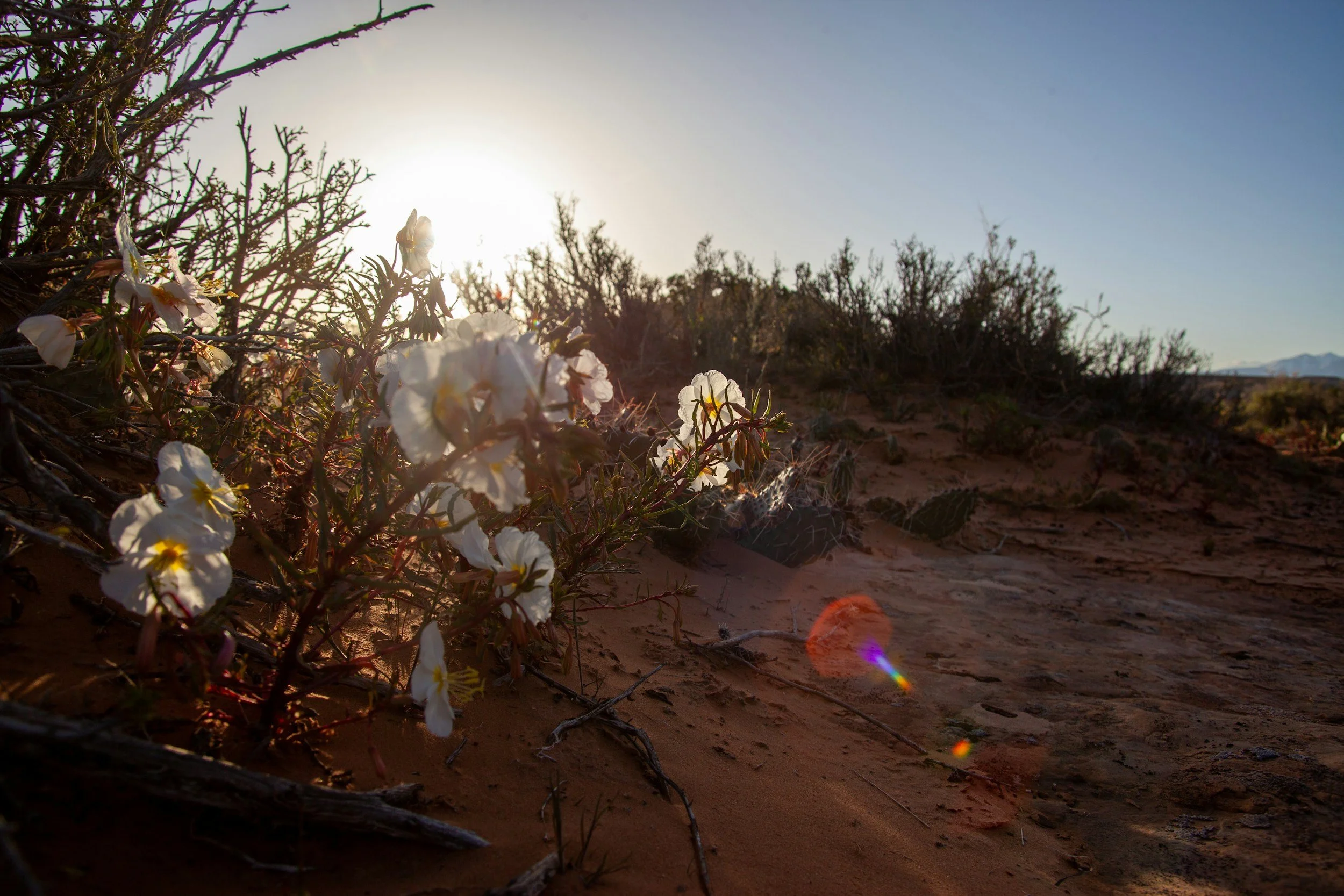
See Differently. Create Differently.
I help people question what they’ve inherited, see things differently, and reimagine what’s possible.
Perspective changes possibility.
Every system, organization, project, and practice is shaped by assumptions about what matters, what works, and what’s possible.
I’m interested in what sits underneath those assumptions. What have we taken for granted? What aren’t we seeing? And what might become possible if we looked at it another way?
Sometimes transformation doesn’t require a better solution to the same problem. It requires seeing the problem differently.

Ways Into the Work
My work moves across research, reflection, conversation, and collaboration. Explore the ideas, spend time with a resource, or bring me into something you’re creating.
Explore Ideas.
Follow the questions I’m thinking about through research, writing, podcast conversations, and video—across education, culture, relationships, systems, and more.
Explore Resources.
Guided experiences for questioning what you’ve inherited, seeing things differently, and exploring what you might choose instead.
Work Together.
Bring me into a project, problem, or idea that could use another perspective. Together, we’ll question assumptions, notice what might be missing, and imagine a different way forward.
From Bloom.ed
Featured Resources
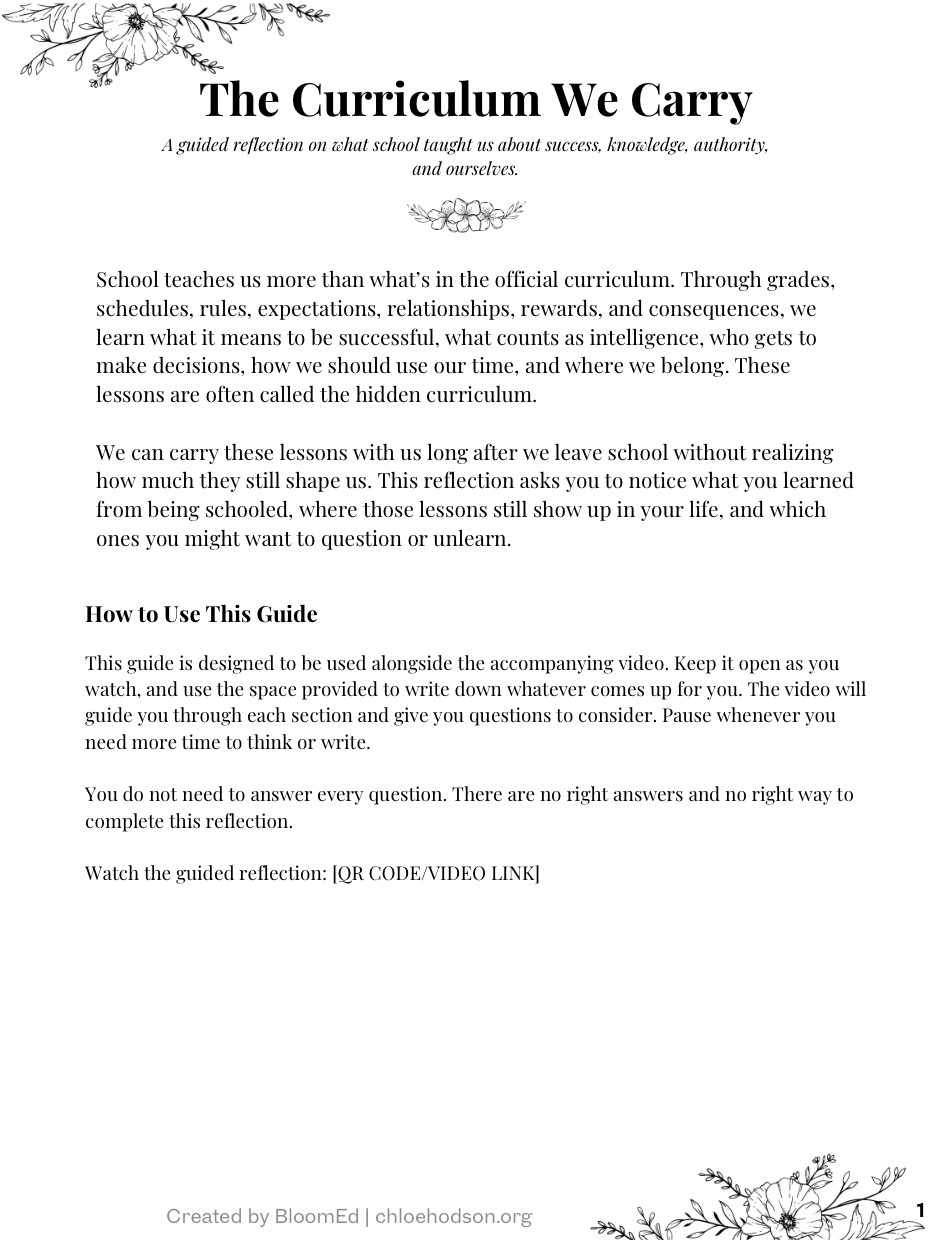
The Curriculum We Carry
A free guided reflection
School taught us so much more than what was in the official curriculum. This four-page reflection and accompanying 20-minute video invite you to notice the hidden lessons you learned about success, knowledge, productivity, authority, belonging, worth, and more, and begin considering what you want to keep, question, or leave behind.
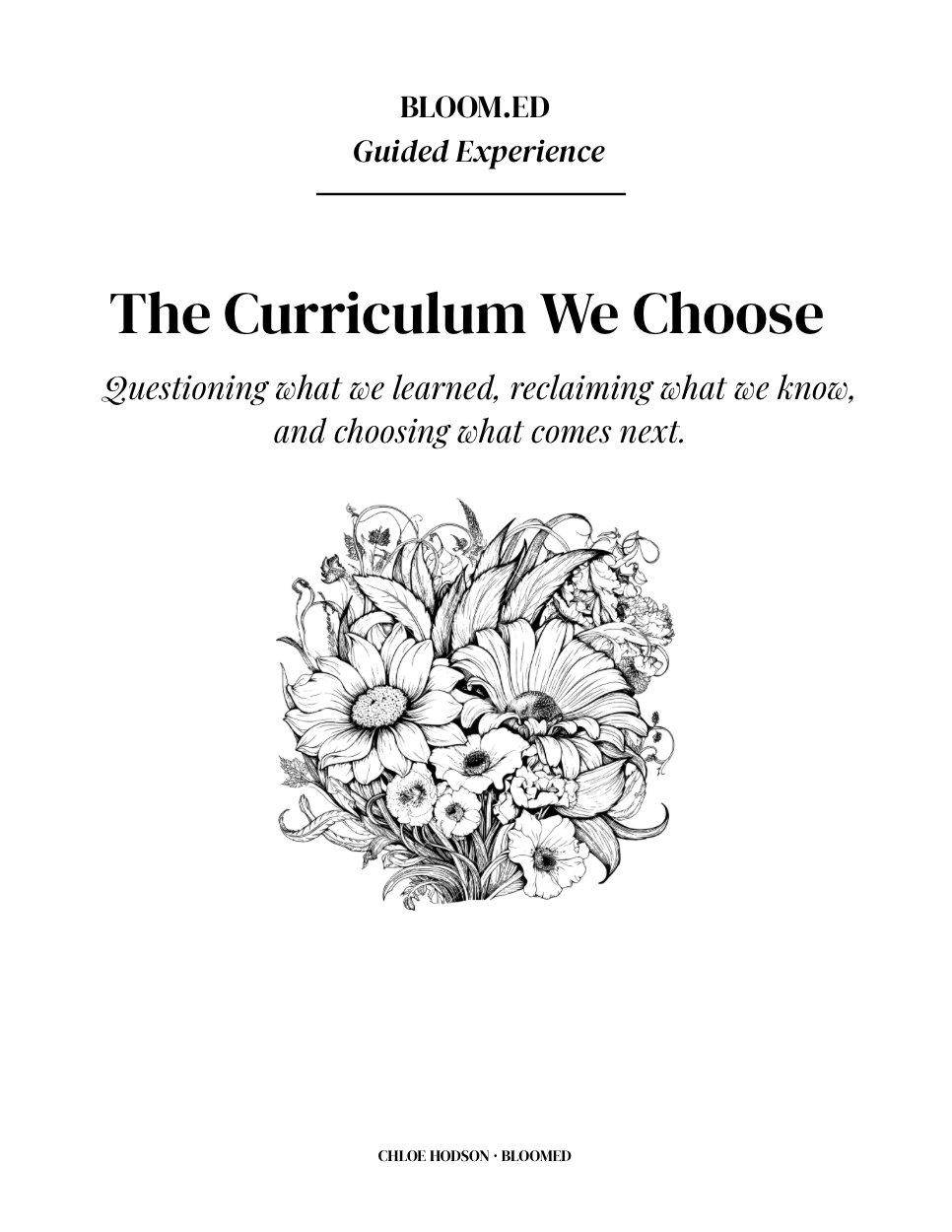
The Curriculum We Choose
A deeper guided practice
This deeper guided experience takes you beyond noticing the curriculum you carry and into the practice of consciously reshaping it. Through six stages, Notice, Trace, Question, Feel, Imagine, and Practice, you’ll explore where your beliefs came from, question the systems and assumptions behind them, reconnect with embodied ways of knowing, imagine what else might be possible, and design a small practice for living differently.
What I’m exploring.
A lot of my work begins with questions about how we live together and what becomes possible when we take our humanity seriously.
My current research explores love as praxis in education, drawing in part from bell hooks’ understanding of love as more than a feeling or sentiment, but as something we practice. I’m interested in what changes when love and presence are understood as ways of being in relationship, not extras we add to education, but part of how education happens. What if schools could be places where we experience and practice love? What if teachers understood themselves not only as educators, but as people capable of creating spaces of connection, belonging, and even healing?
Those questions move beyond my research. On Feel Into It, I follow what I’m noticing in my own life, in conversations with other people, and in the larger culture. Some episodes are conversations; others are reflections on ideas, patterns, and questions that keep surfacing. Across all of it, I’m interested in looking beneath what we’ve accepted as normal, understanding the systems that helped create it, and asking how we might relate to ourselves, each other, and the world more humanely.
Hi, I’m Chloe.
I’m a researcher, educator, and thought partner interested in how the systems around us shape what we know, what we value, and what we believe is possible.
I spent more than a decade working in education before turning more deeply toward research, writing, and creating. I’m currently a PhD candidate in Curriculum & Instruction, where my research explores love as praxis in teacher education.
I think about curriculum expansively. To me, curriculum is not just what happens in schools. We are always learning from the systems, relationships, institutions, and cultures we move through. My work asks what happens when we make those lessons visible, question what we’ve inherited, and imagine something different.